


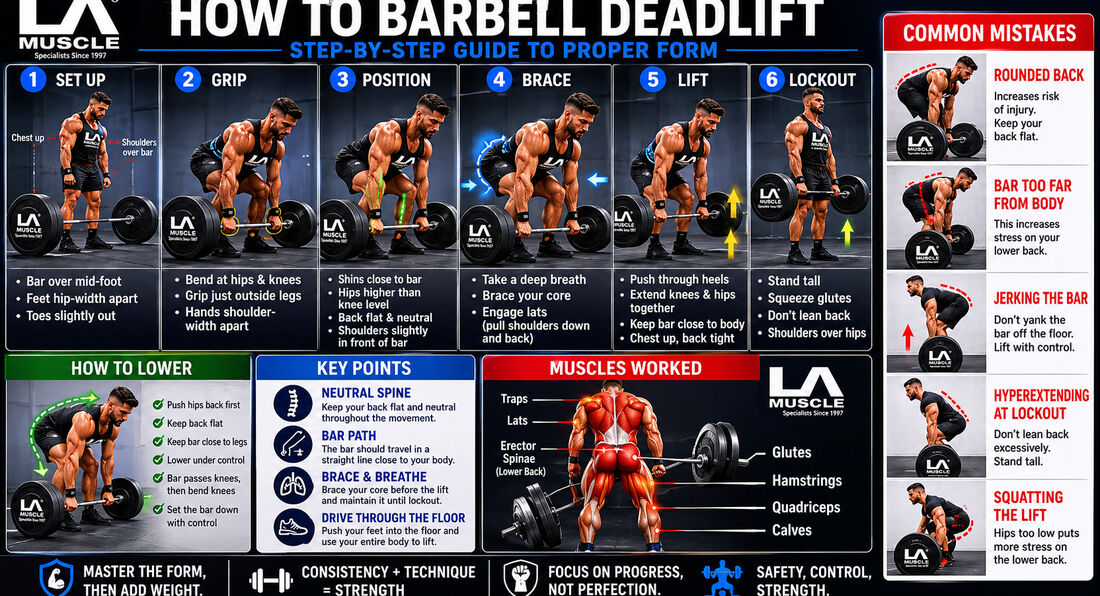
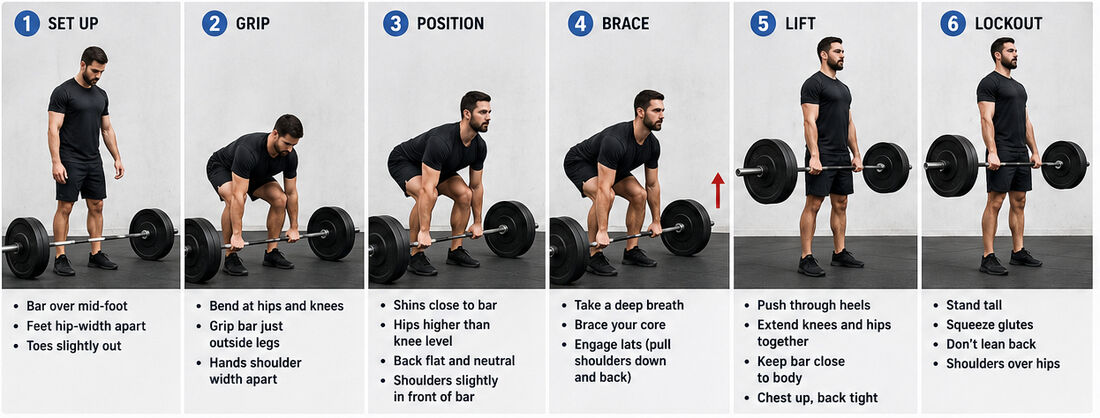
The barbell deadlift is one of the most powerful exercises for building total-body strength, muscle mass and athletic performance. It develops the posterior chain — the muscles along the back of the body — including the glutes, hamstrings, spinal erectors, traps and lats. It also strengthens the core, grip and overall functional power.
When performed correctly, the deadlift can transform strength and physique. However, poor technique can place excessive stress on the lower back and increase injury risk. Learning proper deadlift form is essential for both safety and performance.
What Is the Barbell Deadlift?
The deadlift is a compound movement where a loaded barbell is lifted from the floor to a standing position.
Unlike many gym exercises, the deadlift trains real-world strength because it teaches the body how to safely pick up heavy objects from the ground.
The movement primarily targets:
- Glutes
- Hamstrings
- Lower back
- Upper back
- Traps
- Lats
- Core
- Forearms and grip
It is often considered one of the best full-body strength exercises ever created.
Benefits of Deadlifting
Builds Full-Body Strength
The deadlift recruits more muscle groups simultaneously than almost any other exercise.
Increases Muscle Mass
Heavy deadlifting stimulates powerful muscle growth across the posterior chain.
Improves Posture
Deadlifts strengthen the spinal erectors and upper back muscles responsible for posture.
Develops Athletic Power
Explosive hip extension improves sprinting, jumping and athletic performance.
Enhances Grip Strength
Holding heavy barbells dramatically improves forearm and hand strength.
Strengthens the Core
The entire midsection must brace hard during heavy lifts.
Step-by-Step Guide to Proper Deadlift Form
Step 1: Position the Bar Correctly
The barbell should start directly over the middle of your feet.
A good guide is:
- The bar should be approximately 1 inch from your shins.
If the bar starts too far forward, the lower back is placed under unnecessary strain.
Step 2: Set Your Feet
Your stance should generally be:
- Hip-width apart
- Toes pointed slightly outward
The exact stance may vary slightly depending on body structure and mobility.
The goal is to create a stable and balanced pulling position.
Step 3: Grip the Bar
Bend at the hips and grip the bar just outside your legs.
Common grip styles include:
- Double overhand grip
- Mixed grip
- Hook grip
Beginners should usually start with a double overhand grip to build grip strength naturally.
Step 4: Bend the Knees Slightly
Once gripping the bar:
- Bend the knees until the shins lightly touch the bar.
Do not excessively squat the weight down.
The deadlift is primarily a hip hinge movement, not a squat.
Step 5: Brace the Core
Before lifting:
- Take a deep breath into the stomach
- Tighten the abdominal muscles
- Brace the core as if preparing for impact
Proper bracing protects the spine and creates stability.
Step 6: Flatten the Back
One of the most important aspects of deadlift form is maintaining a neutral spine.
The back should remain:
- Flat
- Neutral
- Tight
Avoid:
- Rounded lower back
- Excessive arching
- Loose upper back positioning
Your chest should stay proud and open.
Step 7: Engage the Lats
Pull the shoulder blades slightly down and back.
Think:
- “Squeeze oranges in your armpits”
- “Bend the bar toward you”
This engages the lats and keeps the bar close to the body.
Step 8: Drive Through the Floor
Begin the lift by:
- Pushing the feet hard into the floor
- Extending the knees and hips together
The bar should travel vertically in a straight line close to the legs.
Do not yank the bar suddenly off the ground.
The movement should feel controlled and powerful.
Step 9: Lock Out Properly
At the top position:
- Stand tall
- Squeeze the glutes
- Keep the chest up
Avoid:
- Leaning backward
- Hyperextending the lower back
- Shrugging excessively
The hips and knees should finish fully extended.
Step 10: Lower the Bar Safely
The lowering phase matters just as much as the lift.
To descend:
- Push the hips backward first
- Maintain a neutral spine
- Keep the bar close to the legs
- Bend the knees once the bar passes them
Lower the weight under control.
Common Deadlift Mistakes
Rounded Lower Back
This is one of the most dangerous mistakes.
It increases spinal stress and reduces force production.
Focus on:
- Core bracing
- Chest up
- Neutral spine
Bar Too Far From the Body
The bar should stay extremely close to the legs throughout the movement.
A drifting bar increases lower back strain.
Jerking the Bar Off the Floor
Sudden yanking can:
- Disrupt positioning
- Increase injury risk
- Reduce power output
Build tension before initiating the pull.
Hyperextending at Lockout
Leaning backward excessively at the top stresses the lower back unnecessarily.
Simply stand tall and squeeze the glutes.
Squatting the Deadlift
Many beginners drop the hips too low.
This turns the movement into an awkward squat hybrid.
The hips should remain higher than squat depth.
Muscles Worked in the Deadlift
The deadlift heavily trains:
- Gluteus maximus
- Hamstrings
- Erector spinae
- Trapezius
- Latissimus dorsi
- Rhomboids
- Quadriceps
- Forearms
- Abdominals
Few exercises stimulate as much total-body muscle activation.
Breathing Technique
Proper breathing dramatically improves deadlift stability. Before each repetition:
- Take a deep diaphragmatic breath
- Brace the core
- Hold tension during the lift
- Exhale near lockout or after lowering
This technique helps stabilise the spine.
Deadlift Variations
Conventional Deadlift
The standard deadlift style with feet hip-width apart.
Sumo Deadlift
Wider stance with a more upright torso.
Often beneficial for:
- Taller lifters
- Those with limited hip mobility
- People with long femurs
Romanian Deadlift
Focuses more heavily on:
- Hamstrings
- Glutes
- Hip hinge mechanics
Trap Bar Deadlift
A beginner-friendly variation that places less stress on the lower back.
How Much Weight Should Beginners Use?
Beginners should prioritise:
- Technique
- Control
- Consistency
Start with:
- An empty barbell
- Light plates
- Gradual progression
Perfect form matters far more than heavy weight initially.
Recommended Rep Ranges
Strength
- 1–5 reps
Muscle Growth
- 6–12 reps
Muscular Endurance
- 12–20 reps
For most people:
- 3–5 working sets
- 5–8 reps
works extremely well.
Equipment That Can Help
Useful deadlift equipment includes:
- Flat-soled shoes
- Lifting belt
- Chalk
- Wrist straps
- Knee sleeves
Flat shoes improve stability and force transfer.
How Often Should You Deadlift?
Most lifters respond well to:
- 1–2 deadlift sessions per week
Deadlifts are highly demanding on:
- The nervous system
- Recovery
- Lower back
Quality recovery is essential.
Mobility for Better Deadlifts
Good mobility improves positioning and safety.
Focus on:
- Hamstring mobility
- Hip mobility
- Thoracic spine mobility
- Ankle flexibility
Dynamic warm-ups before lifting are highly recommended.
The Importance of Progressive Overload
To continue building strength and muscle:
- Increase weight gradually
- Improve technique
- Add repetitions over time
- Increase training quality
Small consistent improvements create long-term gains. The barbell deadlift is one of the most effective exercises for developing:
- Strength
- Muscle mass
- Athleticism
- Power
- Functional fitness
Mastering proper form is essential for:
- Safety
- Performance
- Long-term progress
Focus on:
- Neutral spine
- Strong bracing
- Controlled movement
- Bar path efficiency
- Consistent practice
Done correctly, the deadlift builds a powerful body capable of producing real-world strength and impressive muscular development.


